Daily AI News – 5 Minute Briefing on AI Trends (12 Sep 2025)
 Welcome to Daily AI News. This column provides daily updates on the latest developments in the field of AI. We focus on sharing news, research, and innovative applications that are relevant to developers and those interested in the technology. Our goal is to help readers keep track of current trends and better understand practical uses and progress in AI-related areas.
For past AI daily news, please view Daily Tags.
1. OpenAI and Microsoft Reach Non-Binding Agreement to Push For-Profit Transition
OpenAI announced a non-binding memorandum of understanding (MOU) with Microsoft, allowing it to transition its for-profit division into a public benefit corporation (PBC).
Upon approval, OpenAI’s nonprofit organization will hold over $100 billion in PBC equity and retain operational control. The agreement aims to provide OpenAI with more financing opportunities and pave the way for a future IPO. OpenAI will continue to work with the Attorneys General of California and Delaware to ensure compliance.
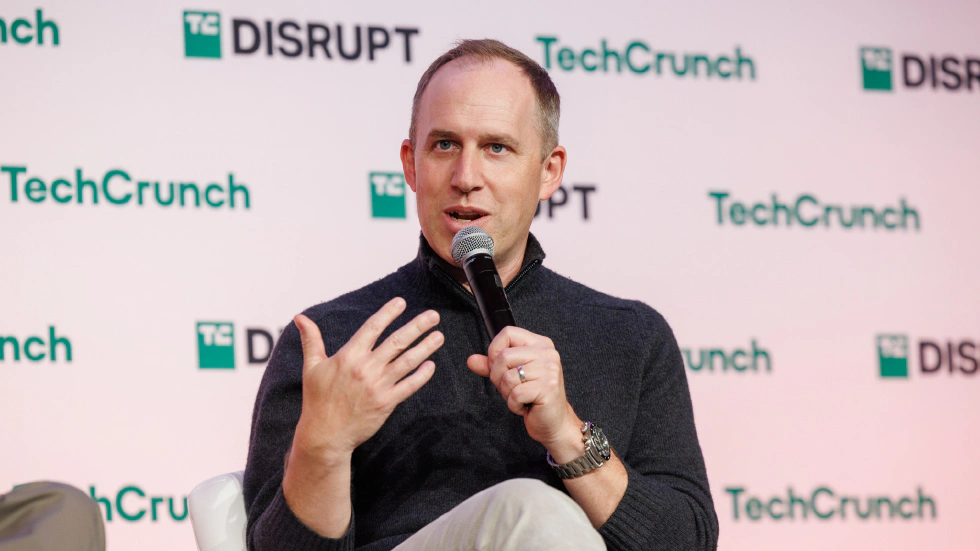
OpenAI Board Chair Bret Taylor stated that this structure ensures AGI benefits all humanity while supporting a $50 million funding initiative by the nonprofit to promote AI literacy and community innovation.
2. California Passes AI Companion Chatbot Regulatory Bill
The California State Legislature passed SB 243, regulating AI companion chatbots to protect minors and vulnerable users.
The bill has bipartisan support and is now awaiting Governor Gavin Newsom’s signature. If signed, it will take effect in January 2026, making California the first state to require AI operators to implement safety protocols.
The bill prohibits chatbots from discussing suicide, self-harm, or sexually explicit content, requires reminders every 3 hours for minors interacting with AI, and establishes an annual reporting mechanism. Individuals can sue violating companies for damages (up to $1,000 per incident). The bill stems from teen suicide incidents and controversies over Meta’s chatbots, pushing AI platforms to strengthen protections for minors.
3. Anthropic Claude AI Adds Automatic Memory Feature
Anthropic launched an automatic memory feature for Claude AI, targeted at team and enterprise users, which recalls past conversation details without prompts, including user preferences, project contexts, and priorities. The feature extends to project generation, supporting chart and design creation based on uploaded files. Users can view and edit memories through settings to ensure privacy.
Anthropic emphasizes that memory is entirely optional and has introduced an incognito chat mode for all users that does not save records. This update boosts work efficiency but raises concerns about similar features potentially causing “AI-related delusions.”

4. FTC Investigates Meta, OpenAI, and Others’ AI Chatbots’ Impact on Minors
The U.S. Federal Trade Commission (FTC) has launched an investigation targeting seven companies—Alphabet, Character.AI, Meta, OpenAI, Snap, and xAI—to assess the negative impacts of AI chatbots on minors.
The probe focuses on safety assessments, monetization strategies, data sharing, content risks, and parental awareness. FTC Chair Andrew N. Ferguson stated that this action ensures AI development considers children’s impacts while maintaining U.S. leadership in the field.
5. Replit Launches Agent3 Intelligent Development Assistant
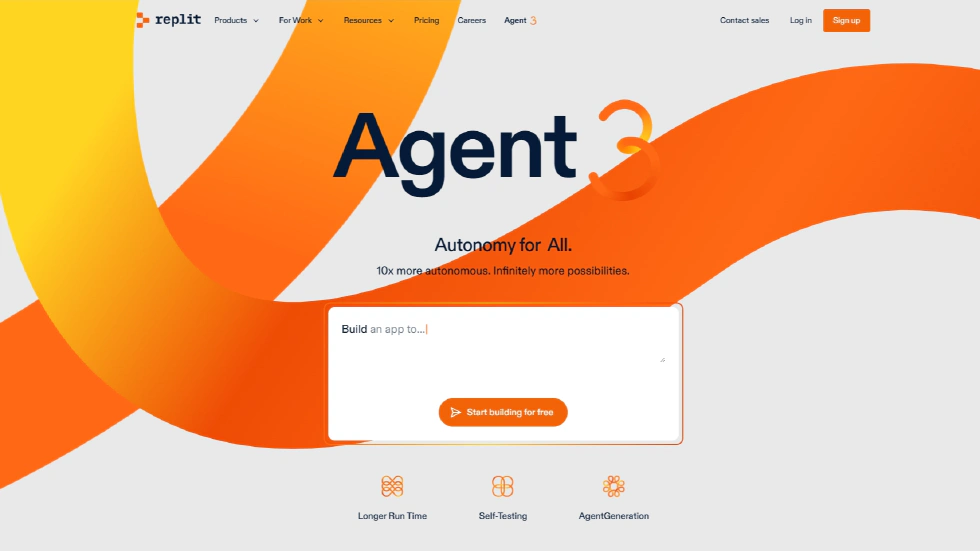
Replit released Agent3, with 10x improved autonomy and 200-minute runtime. Built-in browser verification automatically tests UI elements and debugs fixes. Supports multiple languages, project management, and external API integration. Ideal for rapid prototyping, with tests showing 3x efficiency gains and 10x cost reductions.
6. Perplexity Raises $200 Million, Valued at $20 Billion
Perplexity secured $200 million in funding, valued at $20 billion, with total funding of $1.5 billion. Annual revenue nearly $200 million, challenging Google Search, and previously considered acquiring Chrome for $34.5 billion.
7. Microsoft Increases Investment in Training Autonomous AI Models, Cluster Scale Expands 6-10x
Microsoft AI chief Mustafa Suleyman stated that the company is making major investments to expand compute clusters for training autonomous AI models. MAI-1-preview was trained on only 15,000 H100 GPUs; the new cluster scale will be 6-10x larger.
Suleyman emphasized that Microsoft needs to build world-class frontier models in-house but use others rationally. CEO Satya Nadella supports a multi-model strategy, like GitHub Copilot. This move marks Microsoft’s shift from relying on OpenAI to autonomous AI R&D, competing with Meta, Google, and xAI.
8. DevRev Launches AI Assistant “Computer,” Breaking Enterprise Software Data Silos
DevRev has launched the conversational AI product “Computer,” providing enterprise employees with data access and task execution interfaces. In testing phase, public release by end of 2025. Beyond chatbots, supports creating/updating tasks, integrating CRM, product backlogs, documents, and communication tools.
During testing, multiple world‑famous firms such as Velocity Global, Bolt, and Bill.com have evaluated the Computer and its foundational tech. The results indicate that computers can dramatically boost efficiency, with approximately 85 % of support tickets being automatically resolved and support costs cut by 50 %.

9. Johns Hopkins University Open-Sources mmBERT, Multilingual Encoder Surpassing XLM-R
Johns Hopkins University has launched mmBERT multilingual encoder, base model 307 million parameters, small one 140 million. Uses Gemma2 tokenizer, RoPE, and FlashAttention2, supporting 8192 token sequences. Trained on 3 trillion tokens covering 1833 languages, English 10-34%. Three-stage training improves low-resource language performance. GLUE score 86.3 surpasses XLM-R 83.3, mmBERT score 72.8 surpasses XLM-R score 70.4. Excellent in embeddings and code retrieval.
References
- OpenAI secures Microsoft’s blessing to transition its for-profit arm TechCrunch. 2025-09-11
- TechCrunch_Disrupt 2024_D2_Bret Taylor-3 Flickr. 2024-10-29
- A California bill that would regulate AI companion chatbots is close to becoming law TechCrunch. 2025-09-11
- Anthropic’s Claude AI can now automatically ‘remember’ past chats The Verge. 2025-09-11
- FTC launches inquiry into AI chatbot companions from Meta, OpenAI, and others TechCrunch. 2025-09-11
- After coding catastrophe, Replit says its new AI agent checks its own work - here’s how to try it ZDNET. 2025-09-11
- Replit - Agent 3 Replit.
- Perplexity reportedly raised $200M at $20B valuation TechCrunch. 2025-09-10
- Microsoft is making ‘significant investments’ in training its own AI models The Verge. 2025-09-11
- DevRev Computer: AI assistant becomes AI colleague Techzine. 2025-09-10
- mmBERT: How Johns Hopkins Built a 1,833-Language AI That Outperforms XLM-R Joshua Berkowitz. 2025-09-10
- mmBERT: A Modern Multilingual Encoder with Annealed Language Learning arXiv. 2025-09-08
Disclaimer: This daily news is for reference purposes only. For the latest, official information in AI, please follow authoritative channels.