Outsource Our Minds: How AI Tools Quietly Alter Our Thinking
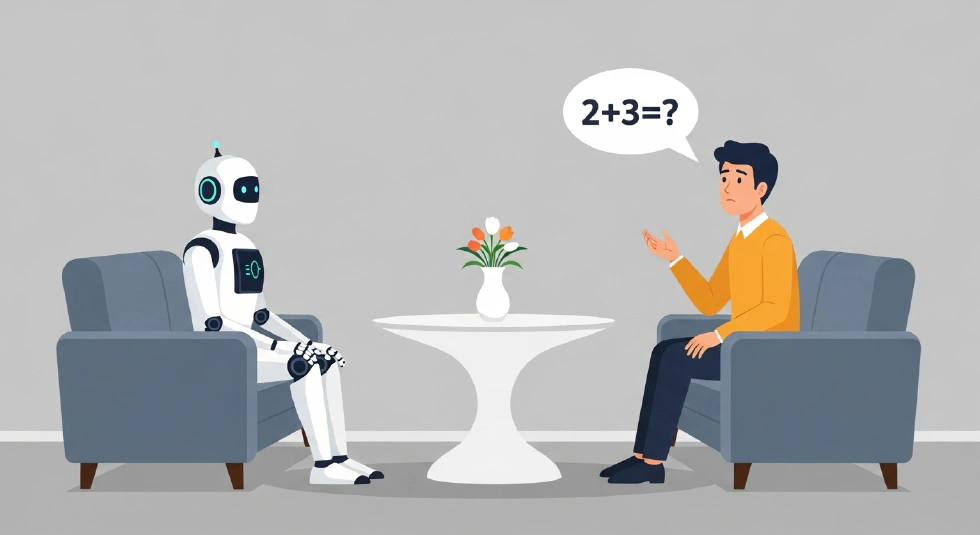 47%—this is the shocking result from a recent MIT study: when using ChatGPT for writing, activity in several key regions of the brain drops by an average of 47%. Even more concerning, participants in the study could barely remember what they had just written only minutes later.
How Deep Does AI Affect Our Brains?
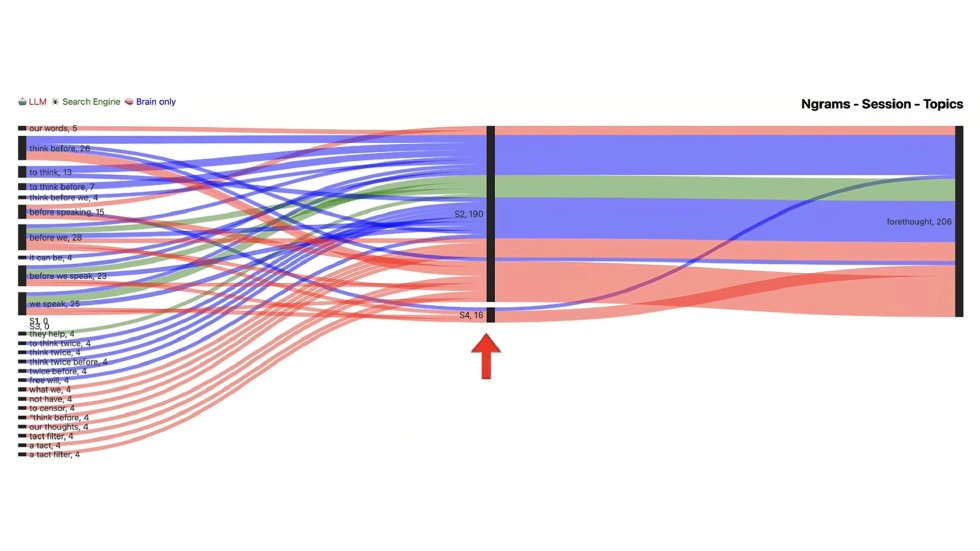
Some may think this is alarmist—could the AI tools we use daily really be quietly changing our brains? In this real neural experiment led by MIT Media Lab, researchers divided 54 students into three groups: one wrote entirely using their own brains, one used search engines, and one used large models like ChatGPT. During the writing process, all students wore EEG devices to record neural connectivity, memory recall ability, and sense of ownership over their work.
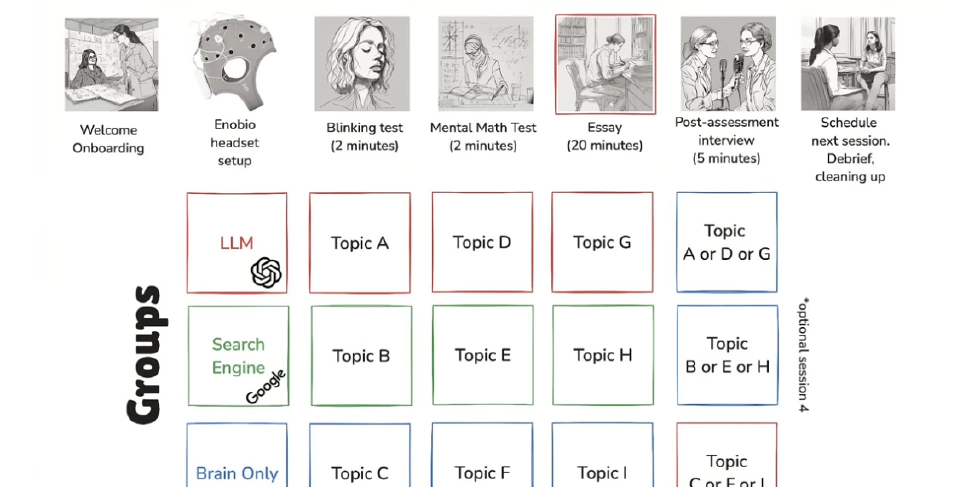
The results were consistent: the group that wrote using only their brains performed best, followed by the search engine group, and the worst was the large model group. In other words, the deeper the AI intervention, the weaker the brain activity, the poorer the memory, and the more vague the expression.
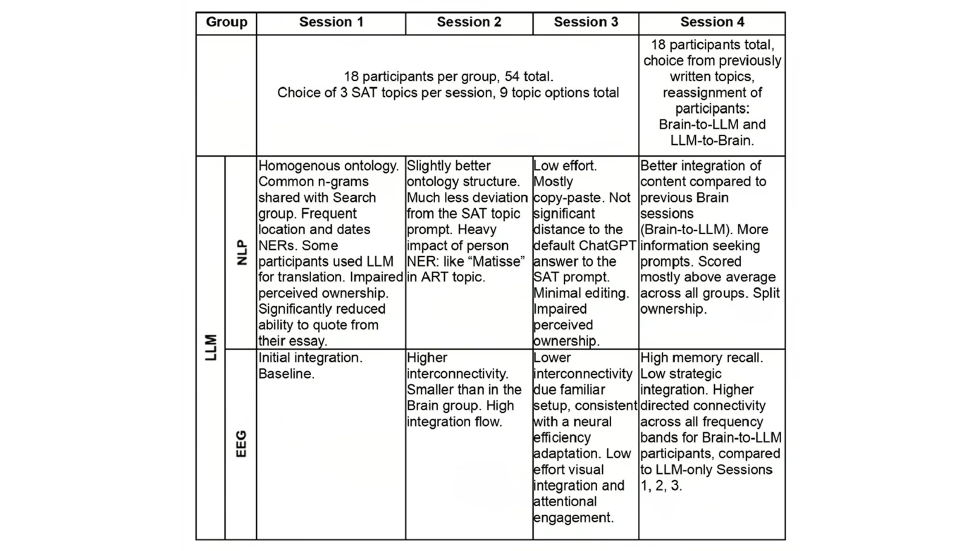
This raises several key questions: Are the AI tools we rely on long-term quietly changing our cognitive patterns? Is our deep thinking ability shrinking behind the surface-level efficiency boost? For children, creators, and knowledge workers, what boundaries should we set for AI use?
Expert Insights: Why Might AI Lead to Brain Degeneration?
With these questions in mind, the well-known podcast CEO Diary invited two experts for an in-depth discussion. One is Terry Sejnowski, a pioneer in computational neuroscience who co-invented the Boltzmann machine with AI godfather Geoffrey Hinton. The other is Dr. Daniel Amen, a clinical psychiatrist with 40 years of brain scan experience—possibly the doctor who has scanned the most brains in the world.
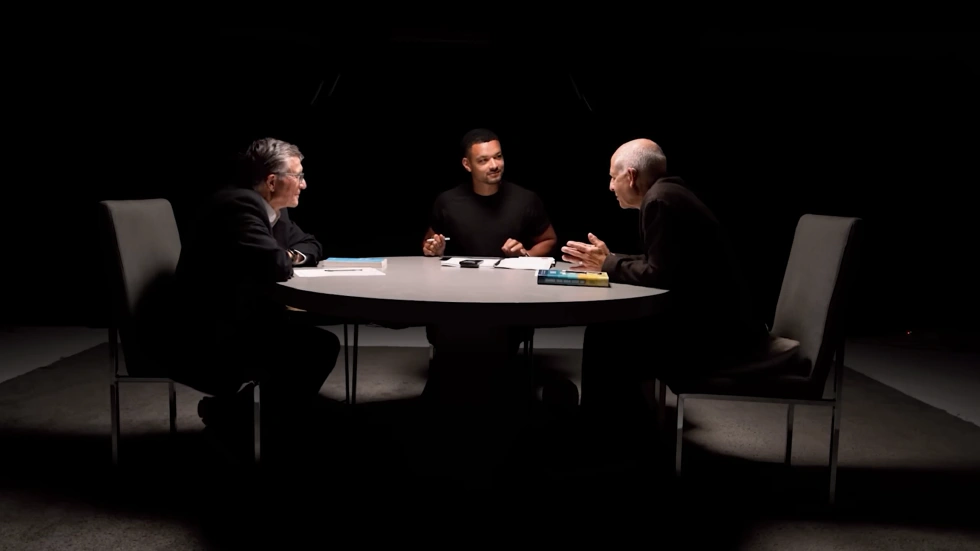
First, let’s look at why using AI might lead to brain degeneration. At the start of the interview, Terry Sejnowski said that while ChatGPT does improve our efficiency, our brains are becoming less involved. In other words, we think we’re more efficient, but we’re actually outsourcing our thinking to the model.
Brain Engagement Drops with AI Writing
The MIT experiment’s key point isn’t that people are becoming dumber, but that when we use AI to write, our brain’s engagement drops significantly. Put simply, our minds are “wandering” while our fingers are still typing.
Dr. Amen added that he’s seen this in many brain scans: when someone simply copies external content—whether from AI or another person—the brain’s activity image dims, especially in the prefrontal cortex, which is most active when we make judgments, organize language, and remember information.
Sejnowski then made a sharp observation: when we get used to letting AI write for us, we go from being the “main character” in creation to just an “audience.” We watch words appear on the screen but are no longer true creators. More importantly, this not only affects focus during writing but also makes it harder to recall what was written afterward.
In the MIT study, participants who used ChatGPT to write were asked to recall their content minutes later. Their recall accuracy was over 30% lower than those who wrote themselves.
The Risk of “Cognitive Fake Action”
Dr. Amen explained that writing is essentially an internal rehearsal process in the brain: you find words, organize order, and constantly judge, allowing memory and understanding to happen together. If AI does it all for you, this process is cut off—which is his biggest concern. When people get used to letting AI do the thinking, the brain becomes less active.
Many people mistakenly think they’re collaborating with AI, but neural responses show they’re just receiving content, not generating it. Sejnowski calls this state “cognitive fake action”—it looks like you’re inputting prompts and clicking buttons, but you’re not truly thinking; you’re watching it think, not thinking yourself.
Of course, both experts maintain an open attitude toward AI. They agree that AI has advantages in speed and efficiency, but they emphasize that fast and good are not the same. If we rely on AI for writing, thinking, and speaking for a long time, the brain learns to be lazy—and human laziness leaves consequences.
Dr. Amen put it bluntly: it’s not that AI makes you stupid, but that after you start relying on it, you stop using your brain.
Who Is Most Susceptible and What Are the Risks?
First, developing children. Dr. Amen says a child’s brain development is like muscle training—if you always rely on external assistance, your own strength never develops. He’s most concerned about children who use AI to do homework from elementary school—they stop organizing language and truly understanding questions, just input a prompt to get an answer. He believes real ability isn’t in getting answers, but in the neural pathways built during thinking. The less you express yourself, the harder it is to learn to express; the less you memorize, the harder it is to remember. This is what he’s seen in thousands of children’s brain scans.
Second, frequent AI writers. Sejnowski is particularly concerned about content creators—not just writers, but also video makers, speakers, and PPT creators. Many have gotten used to giving AI a prompt and directly using the output. He says that when you let AI organize content and express viewpoints for you, your brain shifts from active thinking to passive observation. Over time, independent thinking ability degenerates. The real problem isn’t letting AI write for you, but giving up your own thinking because “it writes better than me.”
Another group is those emotionally dependent on AI—not for work, but for companionship. They like chatting with AI, letting it make decisions, even treating it as a friend who understands them. Dr. Amen has seen many such cases clinically—they say AI understands them best, speaks gently, never argues. But in reality, their brains stop practicing how to understand others, explain emotions, and manage conflict. Social ability, like muscle, weakens if unused.
Sejnowski summarizes: AI can be a tool or a substitute—the difference is whether you still use your brain or rely entirely on it. So, it’s not that you can’t use AI, but you must be clear: when you stop using your own brain to write, think, and communicate, you’re truly giving up control.
How to Use AI Without Brain Degeneration
Knowing the problem, how should we use AI to avoid brain degeneration? This is what the two experts repeatedly emphasized in their interview—the best way to use AI is not to let it do everything, but to help you think deeper. Here are five methods summarized from their views:
-
AI can give suggestions, but don’t let it write conclusions directly. Sejnowski says you can let AI help make your ideas smoother, but you must have ideas first. Many people just ask AI to write a rejection email or a business plan and copy the answer—like always letting someone else take the test, you’ll never learn the problem-solving process. The right way is to write an outline or key points yourself, then let AI polish, complete, and expand. Dr. Amen adds that if you let it speak for you, your brain skips the process of thinking about content.
-
before writing, think for five minutes yourself. Dr. Amen says don’t start writing with AI right away—even five minutes of drafting yourself gets your brain more involved. He gave an example: he had a patient write a letter to family, first drafting it himself, then using AI to polish. The result was not only more satisfying, but also better remembered. So, think first, then use AI—order matters.
-
don’t always let AI agree with you. Sejnowski thinks AI’s biggest problem is being too obedient—it never disagrees or points out mistakes. He suggests deliberately having AI challenge you: ask for possible errors in your viewpoint, or how an opponent would refute you. The principle is simple: when AI starts challenging you, you really start thinking.
-
don’t rush to use AI’s results. Many people ask AI for three suggestions or how to write something. Dr. Amen reminds: if you don’t revise or ask why, the process is meaningless. Thinking doesn’t happen when you input the question, but when you react to the answer. So, after reading AI’s reply, don’t copy-paste—ask yourself if you agree, want to add something, or have a better way to express it.
-
don’t use AI to avoid difficult problems. Sejnowski says real growth comes from solving tough problems, but AI makes it easy to avoid them. You don’t want to explain complex emotions, so you let AI write; you don’t want to organize a speech, so you let AI generate it; you don’t want to think of answers, so you let AI speak for you. When you hand over the hardest parts to AI, you’re also giving up the parts that train your brain most.
In short: AI shouldn’t replace your thinking, but amplify it. If you don’t participate at all, you won’t get smarter.
Training Your Brain: Beyond AI
The conversation also mentioned that besides using AI correctly, we can train our brains to become smarter even without AI. Dr. Amen repeatedly emphasized: AI can be powerful, but what truly makes you smarter is what you do yourself. He’s seen over 200,000 brain scans and knows that many people think brainpower is innate, but it can be trained.
-
move your body to activate your brain. Dr. Amen says the simplest way to boost brainpower is to get outside. He found that people who exercise daily—even just brisk walking for 20 minutes—have more active brain regions than those who sit all day, especially areas responsible for attention, language, and emotion. Running, swimming, jumping rope—any movement is more useful than sitting and reading AI answers. He even jokes that often the problem isn’t in your thinking, but in poor blood flow to the brain.
-
get enough sleep so your brain can “package memories.” Dr. Amen believes what you learn during the day is stored in your brain at night while you sleep. Many people work late and lack sleep, hoping AI will boost efficiency, but his view is clear: no matter how strong AI is, if you don’t sleep well, you won’t remember anything. During sleep, the brain automatically sorts and stores your thoughts, information, and expressions from the day. If you always stay up late, it’s like interrupting a file save halfway. So he suggests letting your brain work actively before bed—turn off AI tools, write a few sentences of summary, which is better than constantly receiving AI content.
-
speak, write, and express more so your brain gets practice. Sejnowski adds that many people think brainpower is just memorization, but if you don’t output, you won’t remember. The brain is like a rubber band—the more you stretch it, the more elastic it becomes. He suggests giving yourself a small daily task: tell someone something AI can’t say for you, handwrite a few sentences summarizing your day, or explain a news story in your own way. Only when you speak, write, and explain yourself does your brain get stronger.
In summary, these are the rules for using your brain, and everyone can do them. You don’t need super willpower or professional knowledge—just keep moving, sleep well, and express yourself actively, and your brain will naturally regain vitality.
Conclusion: Keep Your Initiative
Finally, Sejnowski said in the conversation: AI won’t live your life for you, but it will quietly change your lifestyle. The reality is, we’re already living with AI, but many people don’t realize it’s changing how we think. As Dr. Amen said, if you don’t actively use your brain, AI will make decisions for you. Over time, you’ll find your words, sentences, and even thoughts start to feel less like your own.
So, the real meaning of this conversation isn’t to tell us to stay away from AI, but to remind us to keep our initiative. While AI can help us be more efficient, don’t rely on it completely—only we ourselves can truly make our brains stronger.