Sam Altman Interview: What will the impact be after GPT-5?
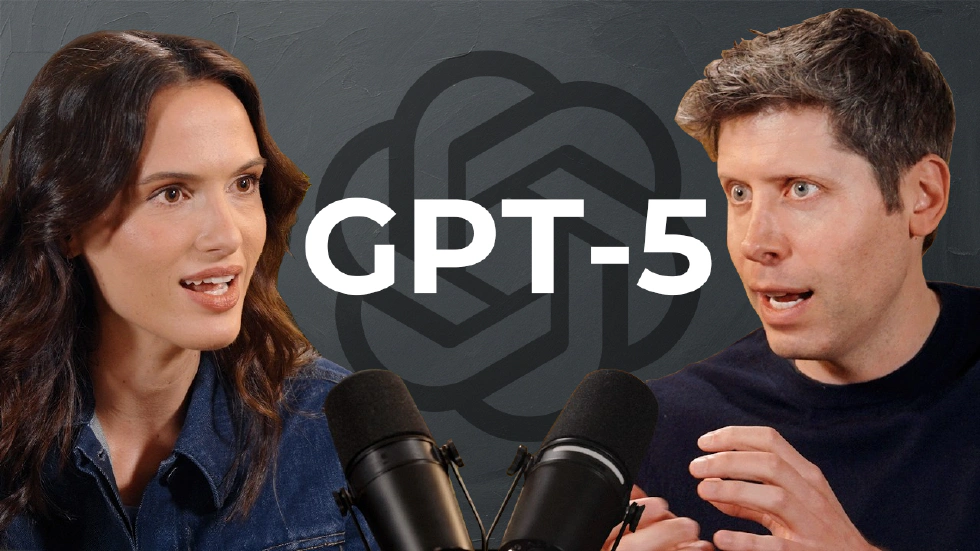 OpenAI has just unveiled GPT-5, and CEO Sam Altman sat down for an exclusive interview with Cleo Abram on Huge Conversations. In this hour-long discussion, Altman shared insights into the challenges behind GPT-5’s development, his views on superintelligence, and what the future holds for AI. Here’s a summary of the most important takeaways from the interview.
What Sets GPT-5 Apart from GPT-4?
While GPT-4 already outperformed 90% of humans in exams like the SAT, LSAT, and GRE, and could pass programming, sommelier, and medical licensing tests, many wonder what GPT-5 can do that GPT-4 couldn’t. Altman explained that, despite GPT-4’s impressive test results, it still couldn’t replicate many uniquely human abilities. These exams have their limitations, and the same applies to GPT-5. It’s astonishing in many ways, but it also has its boundaries.
What excites Altman most is GPT-5’s ability to tackle complex scientific and technical questions and provide surprisingly good answers. He shared a personal story: as a ninth grader, he spent hours programming a “Snake” game on a TI-83 calculator. Recently, he asked GPT-5 to create a TI-83-style Snake game, and it did so perfectly in just seven seconds. This moment made him reflect on the joy of struggling through problems versus the instant gratification AI now offers.
GPT-5’s ability to instantly create customized software is a defining feature of this new era, something GPT-4 couldn’t do. Beyond programming, GPT-5 integrates more naturally into daily life, connecting with tools like calendars and Gmail, and even proactively offering suggestions and reminders.
The Evolution of GPT and Scaling Laws
Altman recounted the history of GPT’s development. Early on, the team was mocked for training models to “play games” by predicting the next word in a sequence, rather than explicitly teaching concepts. This approach, similar to how babies learn language, proved effective. They discovered that model performance improves predictably with increased scale—more computing power, memory, and data—thanks to “Scaling Laws.” Reinforcement learning further boosted reasoning abilities, leading to breakthroughs in models like GPT-5.
However, the journey wasn’t smooth. The release of GPT-4.5, for example, revealed that bigger isn’t always better; model architecture and data quality matter just as much. Altman emphasized the need to explore different “shapes” of models and to overcome data bottlenecks.
Scientific Discovery and Cognitive Effort
Looking ahead, Altman predicts that within a year, AI may not fully discover new scientific knowledge, but it will be very close. If it happens, AI could cure more diseases but also pose biosecurity risks. The pace of change may be dizzying, but humanity’s adaptability will make these shifts the new normal.
The interview touched on the concept of “cognitive effort time”—the idea that deep, focused work is essential for creativity. Some worry that AI tools might become shortcuts to avoid thinking, but Altman believes they can also deepen our thought processes. The most active ChatGPT users, he noted, are achieving remarkable productivity and learning.
Major Questions from Industry Leaders
Altman addressed questions from other tech leaders. Stripe’s CEO Patrick Collison asked when AI will make major scientific discoveries. Altman bets that by the end of 2027, most people will agree that AI has achieved significant breakthroughs. Nvidia’s CEO Jensen Huang asked about AI’s understanding of “truth,” which varies by culture and perspective. Altman was surprised by how well AI adapts to different backgrounds, especially with enhanced memory features that personalize interactions.
The Challenge of Authenticity and Social Impact
As AI-generated content becomes more prevalent, Altman suggested technical solutions like encrypted signatures to verify authenticity. However, he believes society’s standards for “real” will continue to evolve, much like how we already accept AI-enhanced photos and media.
Regarding the impact of AI on jobs and society, Altman acknowledged that some roles will disappear, many will change, and new ones will emerge. The speed of change may outpace society’s ability to adapt, requiring humility and openness to new solutions. He also raised the need to rethink resource distribution, especially AI compute power, to avoid conflict and maximize creativity.
A New Social Contract and the Future
Altman compared AI’s integration into society to the transistor—once revolutionary, now ubiquitous and largely forgotten. He believes AI will become similarly embedded, with future generations taking it for granted. The real focus will shift to what people build on top of AI.
He closed with reflections on the responsibility of AI developers and the importance of sharing resources. While some fear AI’s potential for harm, Altman finds it hard to understand those who work tirelessly on AI yet predict its doom. He advocates for a balanced approach: maximizing benefits while minimizing risks.
Conclusion
Altman’s interview after GPT-5’s release offers a candid look at the breakthroughs, challenges, and philosophical questions facing AI today. While GPT-5 shines in programming and scientific reasoning, its true impact will depend on how it’s applied and integrated into society. The journey of AI is far from over, and the next chapters promise even greater transformation.